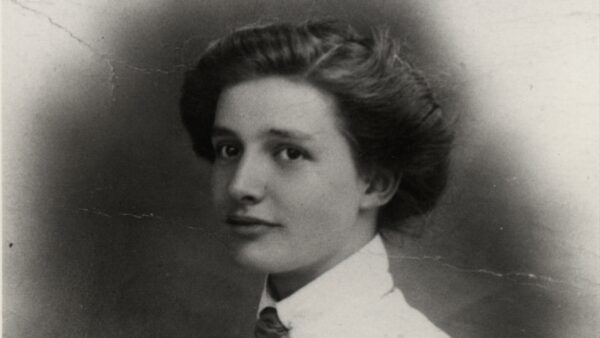
Re-discovering Lincolnshire’s Black Workers
Alison Brackenbury, local author and guest contributor
In the 1790s, through the gateway at Redbourne Hall, an aristocrat’s carriage swept into the parkland. A servant sat high on the box of the horsedrawn carriage. Beautifully uniformed, he was conspicuously on display. His name was Isaac Tisdale Thompson, and he was black.
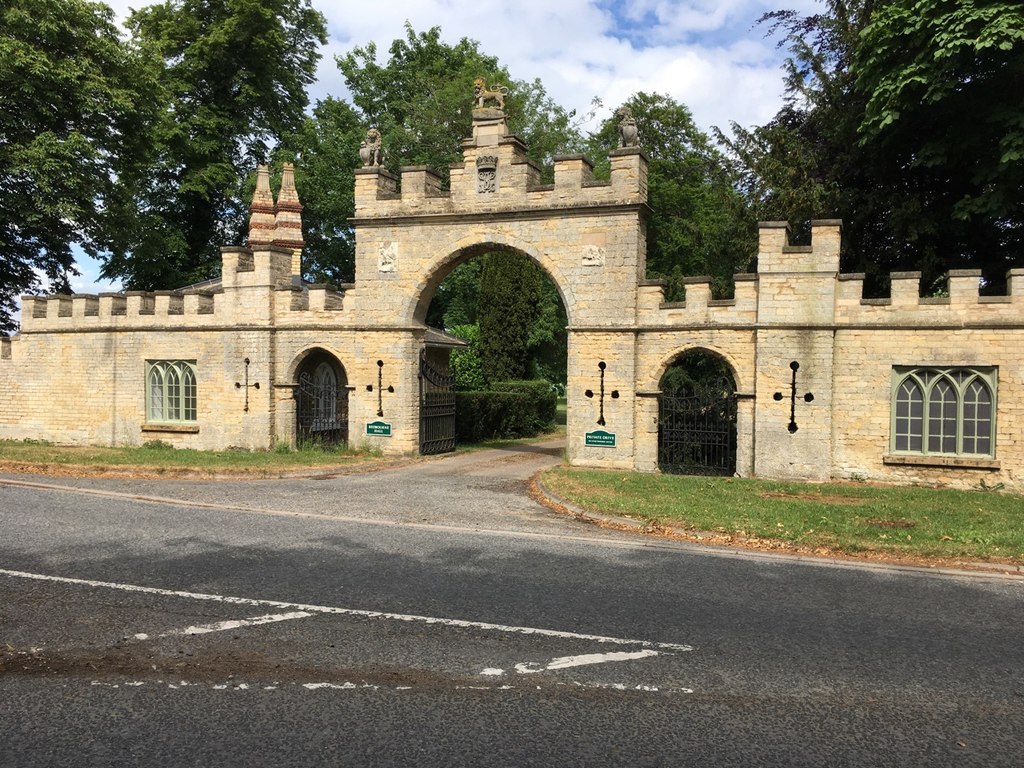
This story was told to a young Ethel Rudkin, who grew up to become a distinguished archaeologist and folklorist. She wrote a diary, the third part of which was published posthumously in 2020. This third instalment contained the story of Isaac Thompson, of Willoughton, the son of Isaac Tisdale.
“Isaac Thompson was very dark, with crisp curly black hair, and was the son of a black man who was in service with the Duke of St Albans and was brought to England by that Duke.”
From The Diary of Ethel H. Rudkin Part Three 1932 -1934. Published by Old Chapel Lane Books, Burgh le Marsh, Lincolnshire 2020.
Little is known about Isaac Tisdale Thompson’s life before he arrived to live in England and worked as a servant. It is possible that his second name Tisdale is a link to the Tisdale plantation of South Carolina owned by the Tisdale family. This plantation enslaved black Africans. Wealthy families in Britain and beyond were involved in the transatlantic slave trade because it offered enormous profits from the trafficking of enslaved African people and the exploitation of their labour on plantations producing valuable goods like sugar, cotton, and tobacco.
It is possible that Isaac Tisdale Thompson or one of his relatives survived the transatlantic slave trade.
In 1796 Isaac Tisdale Thompson married Mary, in Redbourne Church. Mary bore at least six children, who survived. One of these children was Isaac Thompson, born in 1814. The Vicar listed his father as a Labourer. Issac Tisdale Thompson died in Redbourne in 1833, aged approximately 67.
His son, young Isaac Thompson’s working life began in Willoughton. In 1832, he went to a hiring fair. His new employer was John Richardson. Hired for just a year, Isaac agreed to stay for two. Isaac worked as a horseman. Ethel Rudkin’s third diary instalment states the Thompsons possessed an ‘uncanny power over horses’.
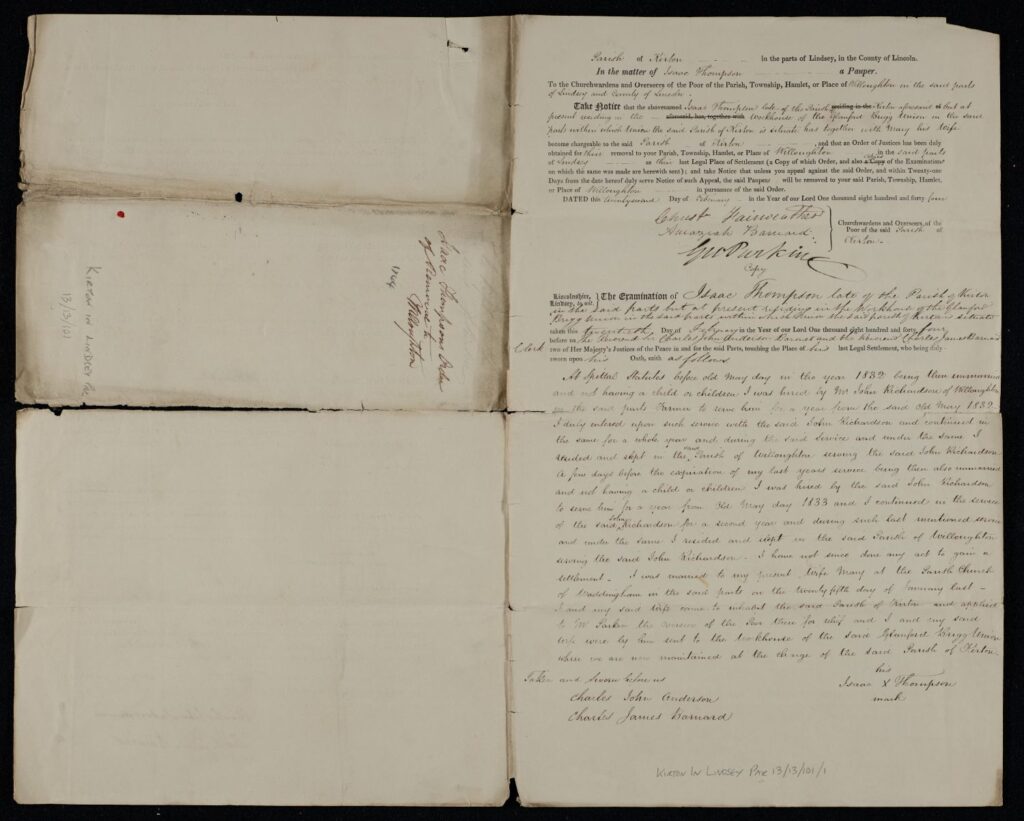
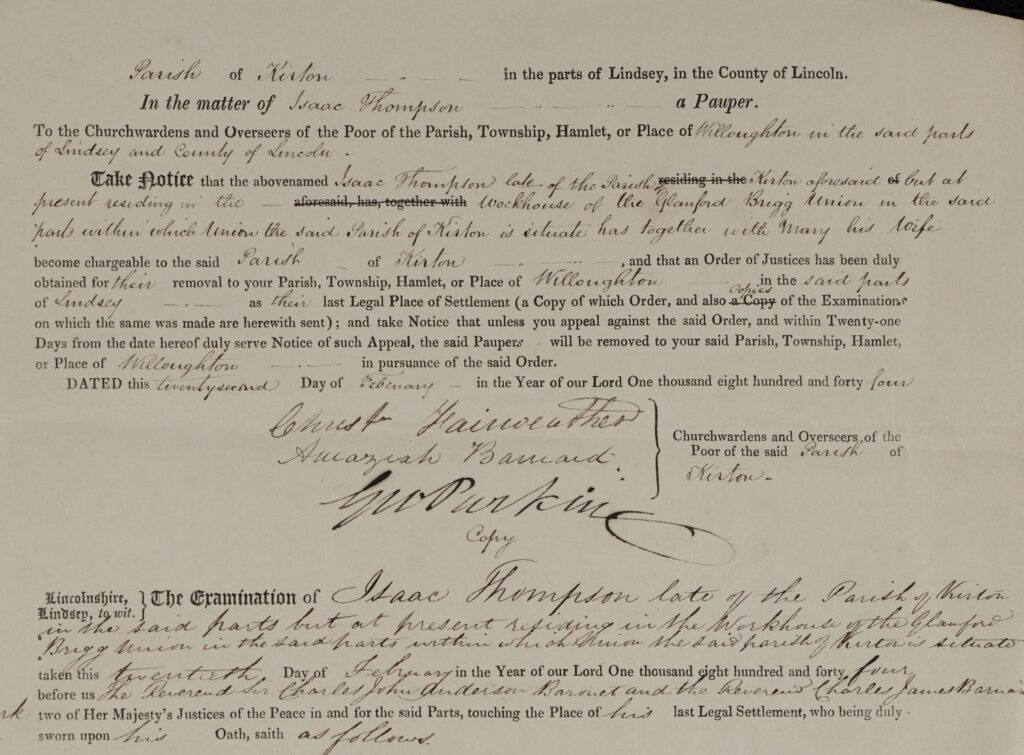
In January 1844, newly married with a pregnant wife, Isaac was living in Waddingham and had not yet obtained a job with a cottage. Without a home, he and Mary went to the town of Kirton. They were promptly sent to Brigg’s new workhouse.
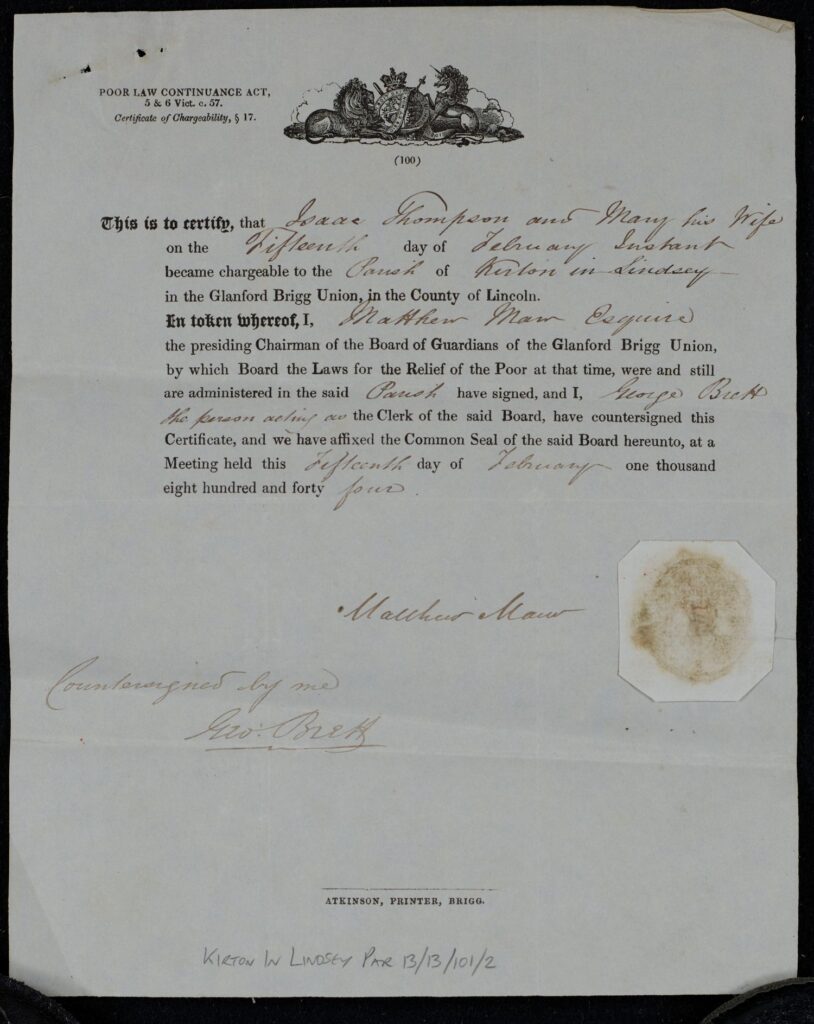
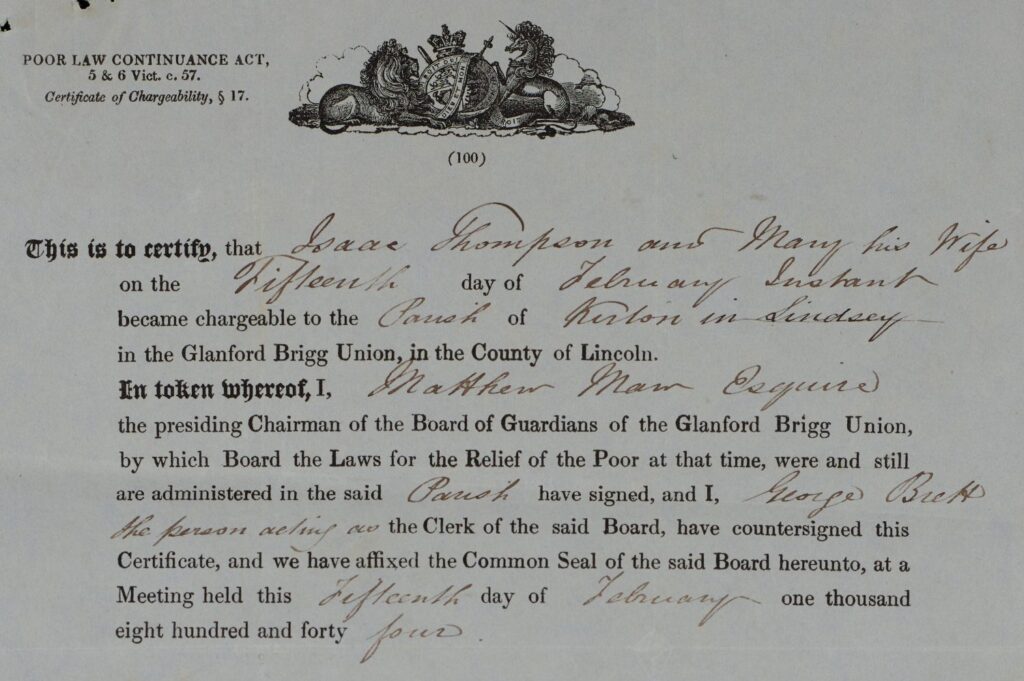
Isaac and Mary were sent to Willoughton in a Poor Law Removal. Their little son George died at 7 weeks old. Poverty may have driven Mary to work in the harvest fields. Issac and Mary had six more children who lived. He and Mary stayed in Willoughton and for a while moved to the windy, inconvenient hilltop above the village, known locally as the Cliff. 30 years after their arrival, bronchitis, with no antibiotics available, proved fatal to Mary. Isaac survived for another 17 years.
Mrs Rudkin’s diary preserves a clear description of old Isaac Thompson’s final home in Willoughton. The cottage had one downstairs room, overshadowed by a great walnut tree.
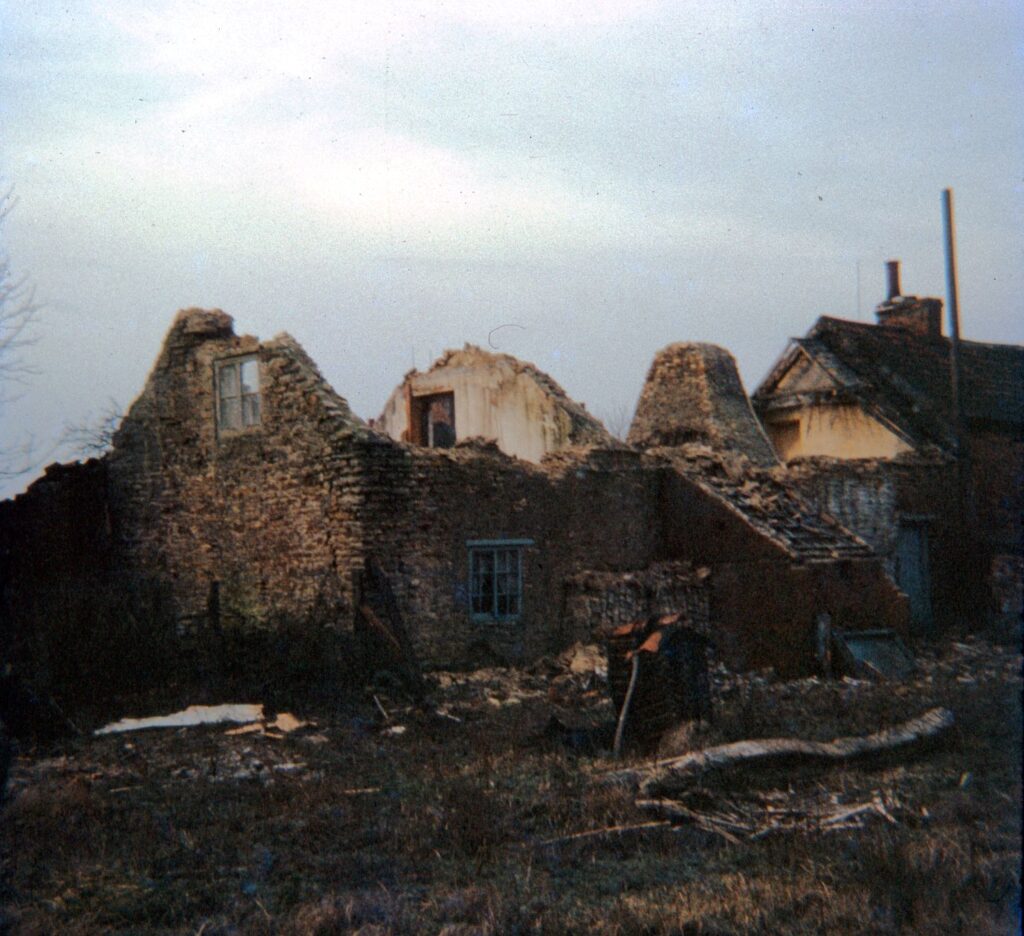
Isaac was listed there as a lodger in two Censuses. He lived in Willoughton for half a century, longer than most of his fellow workers, who flitted to labour on other farms, or, like his own son James, to work in Scunthorpe’s steelworks. Isaac Thompson died in 1892, aged 78. Records suggest that he never stopped working as a horseman.
“In Vicarage Road, I would nod respectfully to quiet elderly men, who stepped from low cottages through dark doors and came towards me slowly, bent into blinding winter sun. They were the “old waggoners”, mysterious and heroic in my eyes. One, I believe, was Isaac’s grandson.”
This memory comes from Willoughton, in the 1950s. From the book Village, by Alison Brackenbury,
There is evidence that the Thompsons wanted their story to survive. Young Isaac Thompsons’ brother and Isaac Thompson’s son both gave one of their children a version of the name Tisdale, but sadly neither of these children survived.
Is Isaac Thompson of Willoughton, or his father, Isaac Tisdale Thompson of Redbourne, part of your family tree? Do you have stories to share of these exceptionally skilled black workers, who are part of Lincolnshire village history? If you do and would like to share them, please do contact us.
Village by Alison Brackenbury
Alison Brackenbury is a poet and broadcaster. Her latest book, Village: Survival in Six Houses 1841 – 1971, is a wonderful read documenting a history of Willoughton. Featuring the story of Isaac Thompson, Village is out now.