
Home in Our Hearts – Дім у наших серцях: The Exhibition Part 1
Kathryn Spence, Community Curator and the Ukrainian Exhibition Working Group
Introduction
Home in Our Hearts – Дім у наших серцях is a community-led project and exhibition celebrating 80 years of the Ukrainian community in North Lincolnshire, made possible by the Museums NPO grant as part of the Humber Museums Partnership. The project was developed to address the lack of museum records and objects representing Ukrainian experiences and connection with Ukrainian audiences, highlighting the community’s enduring cultural contribution to the area. The project began in August 2025, and the resulting exhibition is on display at North Lincolnshire Museum until 8 November 2026.
The project and exhibition saw over 150 loaned objects from the Ukrainian community come together for display; some now reside in the Museums Collection as permanent documentation of Ukrainian history in North Lincolnshire. This article documents is one part in a series of two which explore the formation and content of the exhibition.
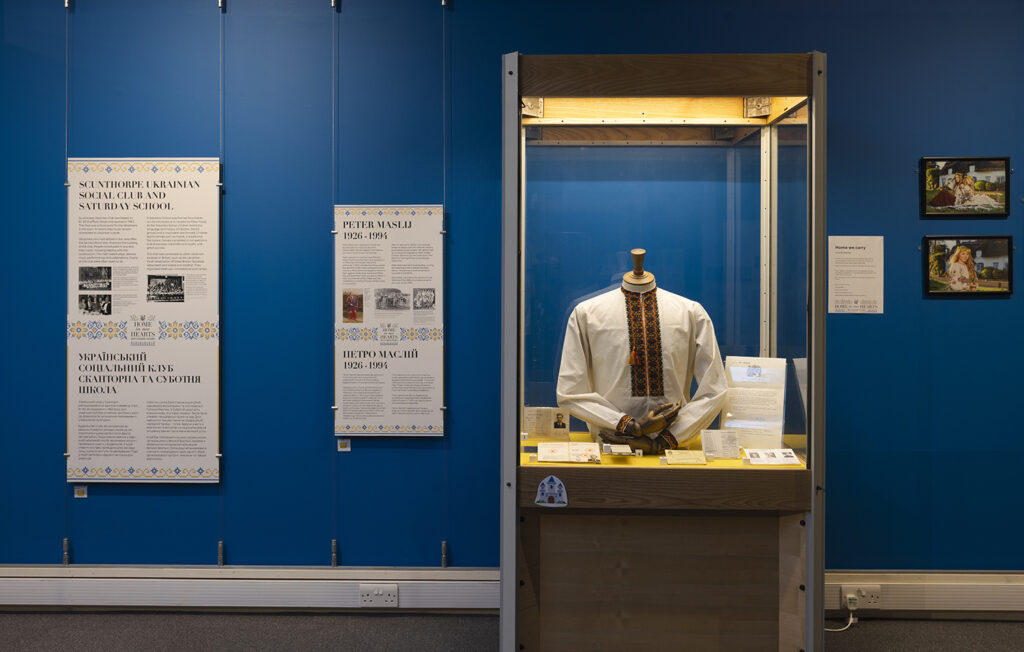
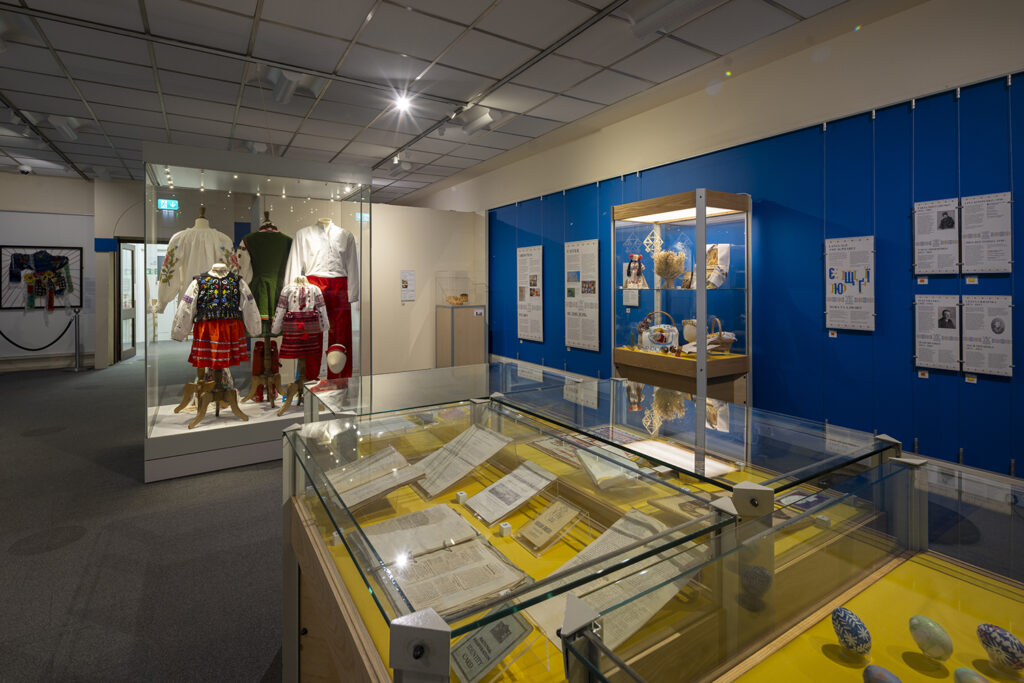
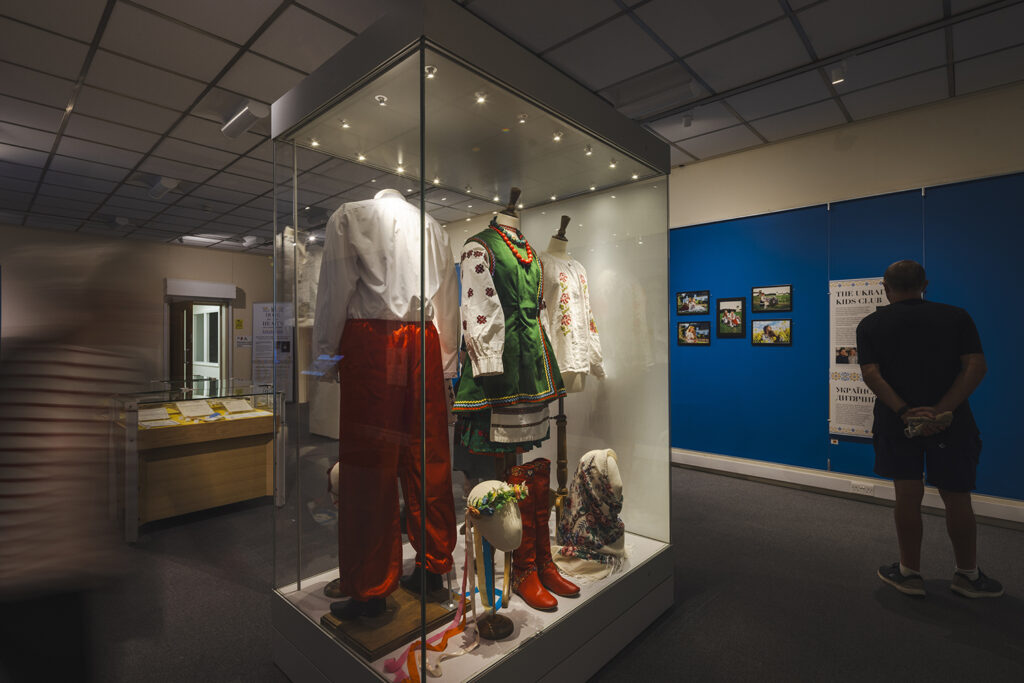
On the 31 August 2025, an exhibition working group met for the first time. The group was formed of community volunteers, including post-Second World War Ukrainians and their children, people who came to live in the area after Ukrainian independence and people who had fled the ongoing war in Ukraine. We met at the Museum at weekends to decide and collaborate on exhibition content. We began to focus on three main themes:
- The story of the post-Second World War Ukrainian community in North Lincolnshire.
- The story of the contemporary Ukrainian community in North Lincolnshire.
- An introduction to, and celebration of, Ukrainian culture.
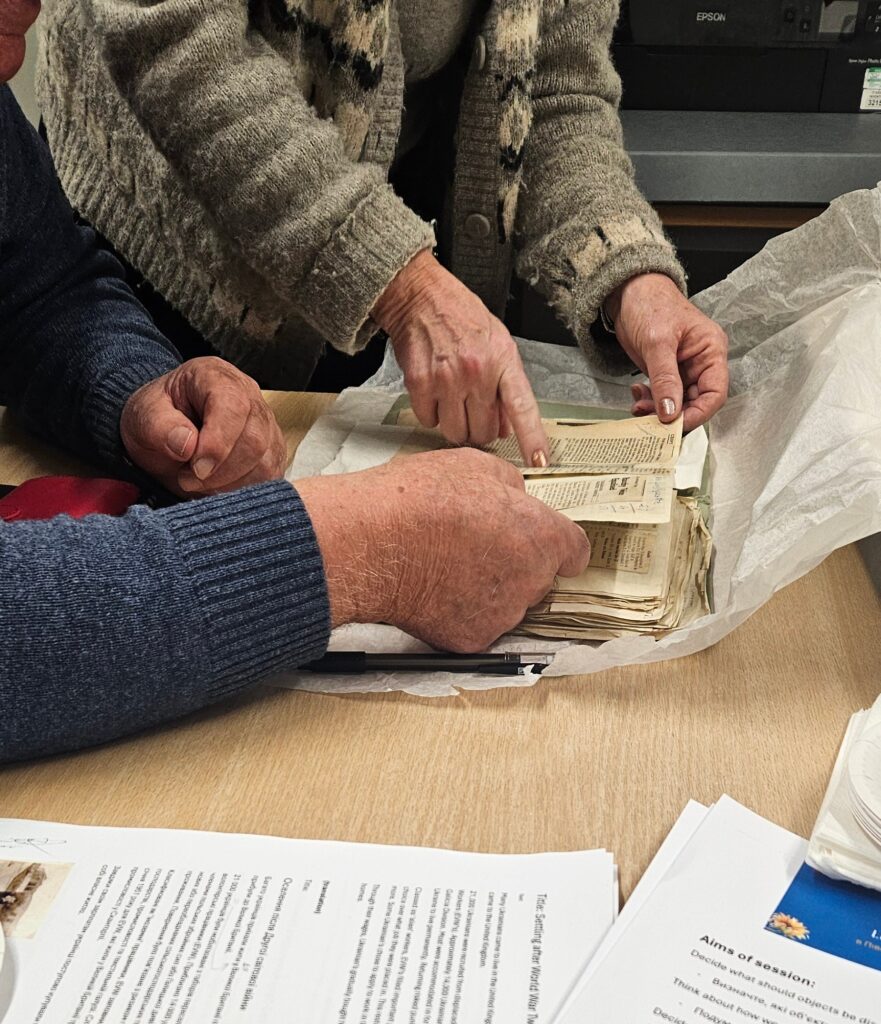
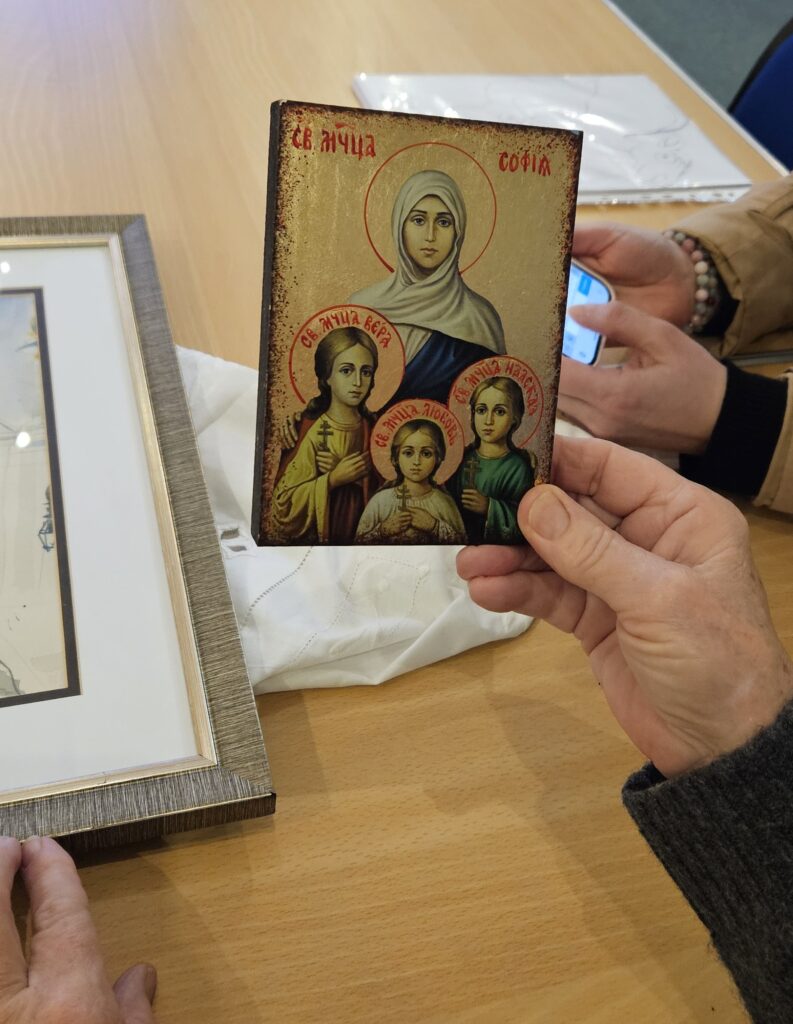
“For all of us involved in putting the exhibition together it was like reliving our childhood as second generation Ukrainian kids… glad we could fill in the gaps and I know our Ukrainian parents would be so proud.”
Anna Pukas James, Exhibition Working Group
Unexplored Stories
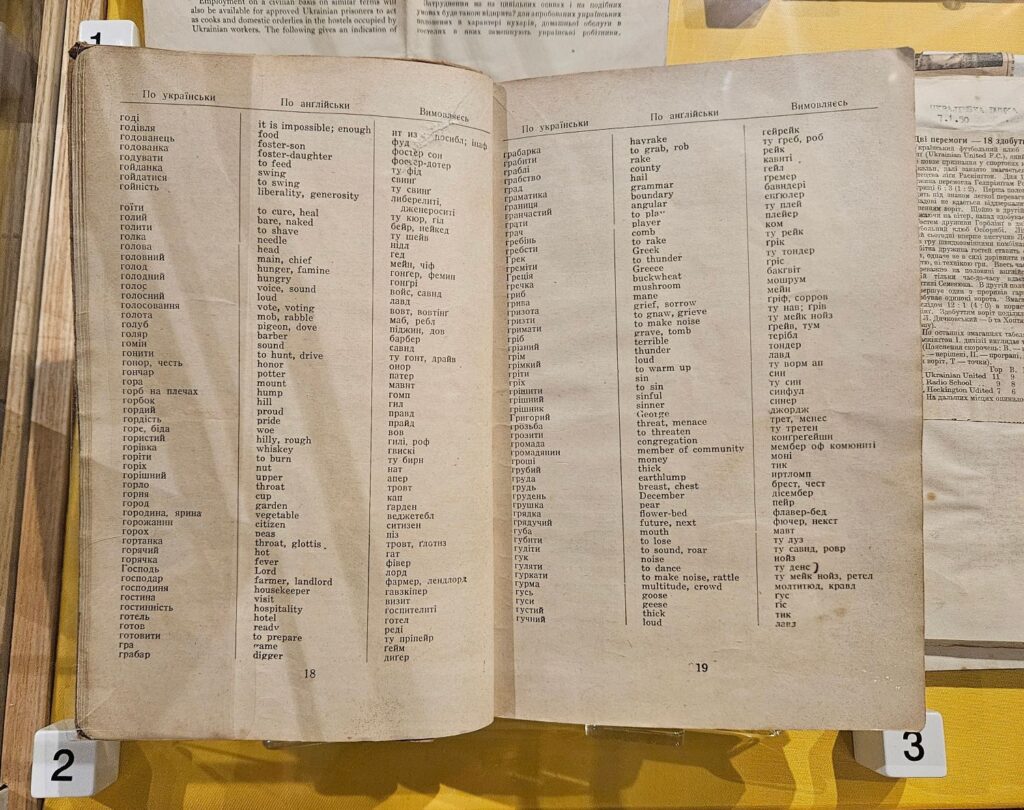
The working group identified an object in the Museum’s care which had previously unexplored connections to the North Lincolnshire Ukrainian community. Stored in the Museums library, was found an unaccessioned Ukrainian to English dictionary belonged to Fyodor Maksemiev. Dated from 1952 the group reasoned that the dictionary could have belonged to someone, like their parents, who had come to live in the UK as a result of the Second World War. Inside the dictionary, the blank pages featured sketches and drafts of letters to loved ones.
Global Contexts
It was important to contextualise the country which the Ukrainians who had settled in North Lincolnshire after the Second World War had grown up in. Ukraine became part of the Soviet Union in 1922, and as a result was subject to and participated in ruthless Soviet policy. Ukrainian nationalism was perceived to be a threat under Josef Stalin.
Holodomor 1932 – 1933
The Holodomor was a devastating, man-made famine that took place under Soviet rule. Holodomor translates as ‘death by hunger’.
Ukraine was one of the biggest grain producing regions of the Soviet Union. Holodomor was caused by the policies of Joseph Stalin. These included forced collectivisation of farms, extreme grain requisitions, and restrictions on movement. The Soviet Union did not allow foreign aid. Entire villages were stripped of food, leaving people with no means to survive.
In 2003, a joint statement signed by the United Nations and 25 countries declared that seven million people lost their lives. The Holodomor is recognised by Ukraine and many countries as an act of genocide. It aimed to crush Ukrainian national identity and resistance. Victims are remembered each year on Holodomor Memorial Day, observed on the fourth Saturday of November.
Settling after the Second World War
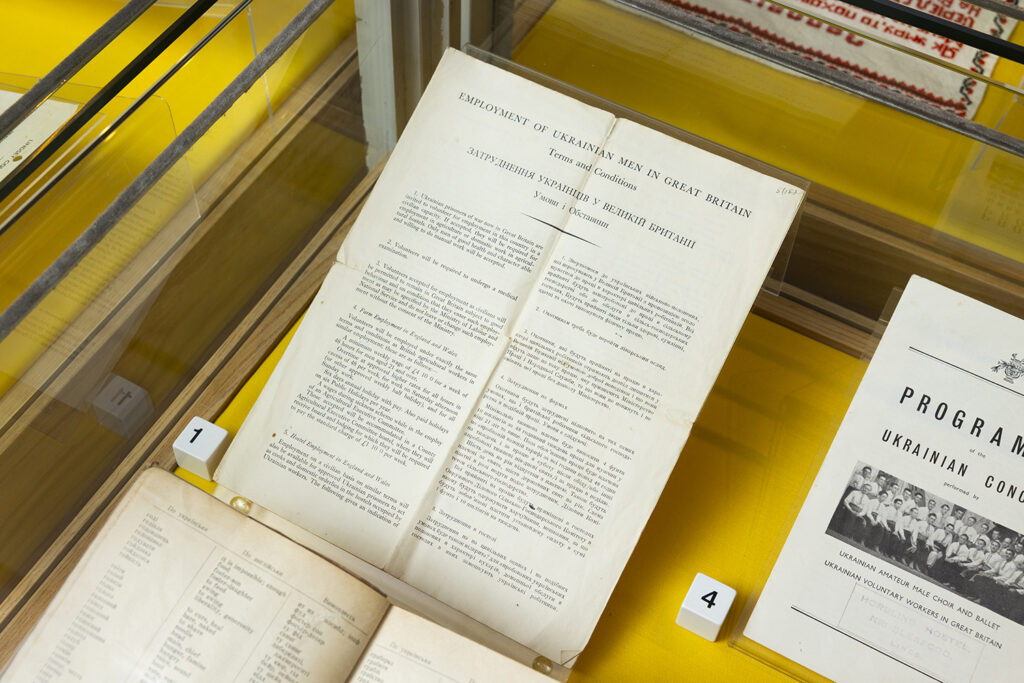
Many Ukrainians came to live in the United Kingdom during or at the end of the Second World War. Between 1946 and 1950 approximately 35,000 Ukrainians came to the United Kingdom.
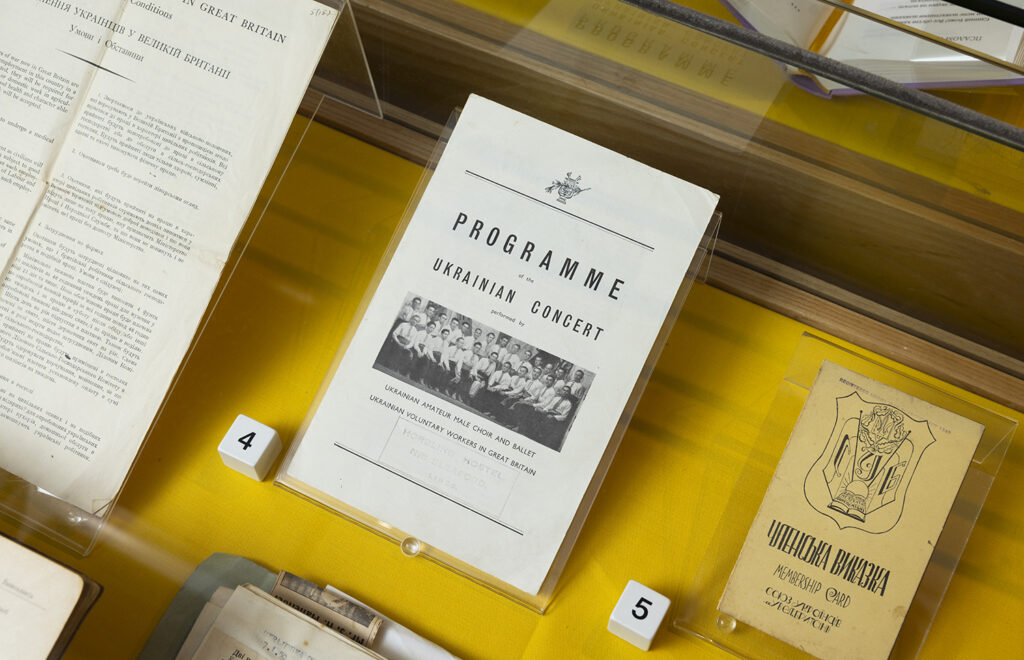
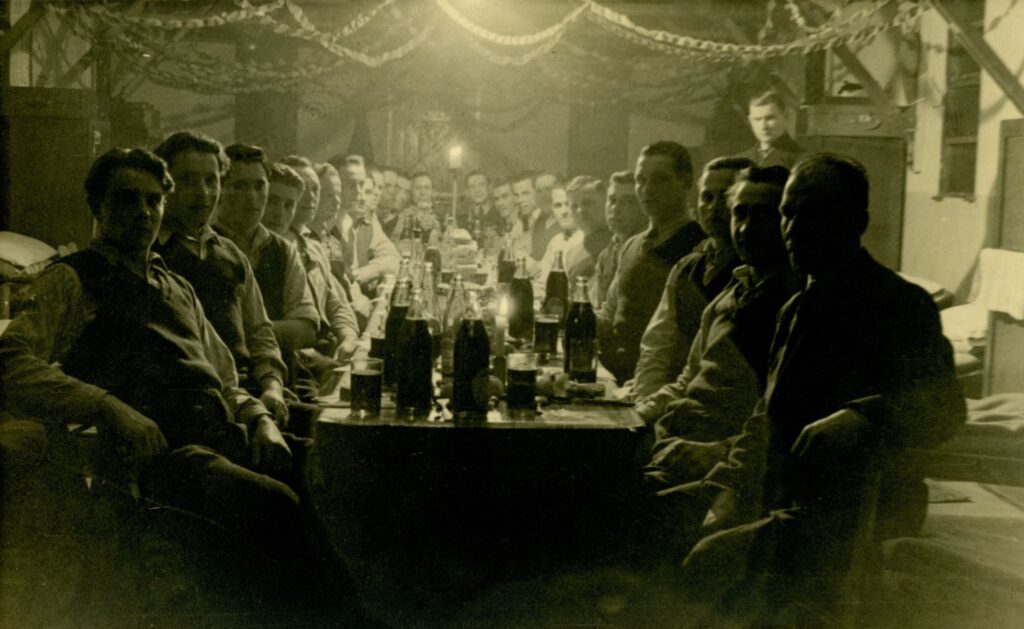
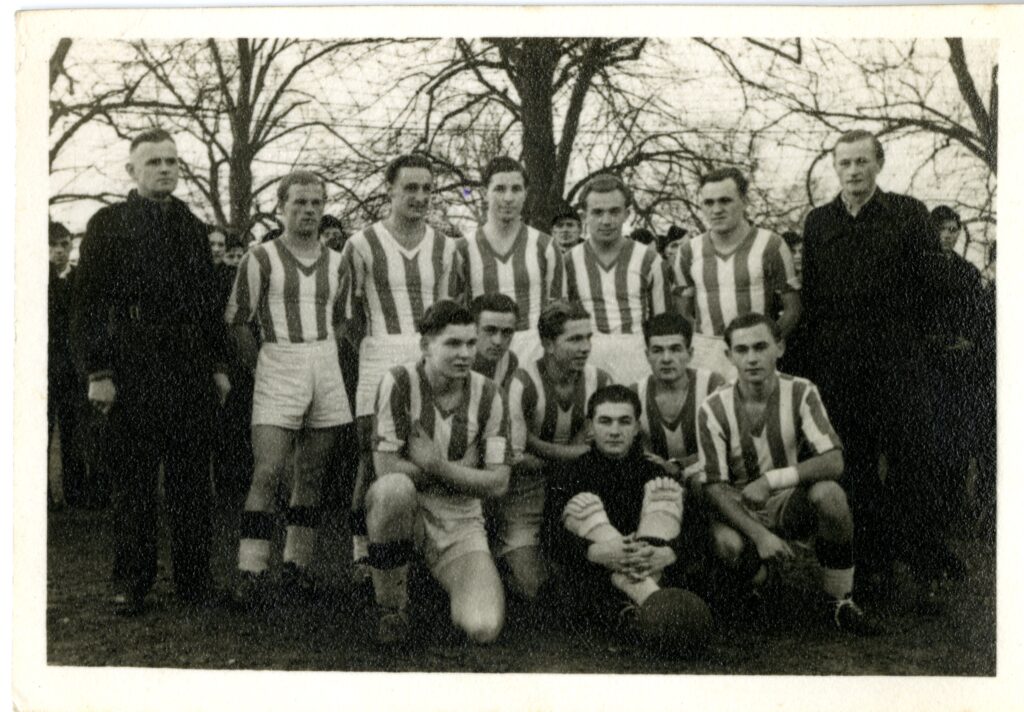
21,000 Ukrainians were recruited from displaced persons camps in Germany, Austria and Italy to work in the United Kingdom as European Voluntary Workers (EVWs). Approximately 6,000 Ukrainians were already stationed in the UK, serving in the Polish Armed Forces. 8,500 Ukrainians were former members of the Galicia Division under the Germany army and came over as Prisoners of War. Most were accommodated in Prisoner of War camps and new or converted agricultural and industrial hostels. Few returned to Ukraine to live permanently. Under Soviet governance, returning risked punishment, deportation to concentration camps and death.
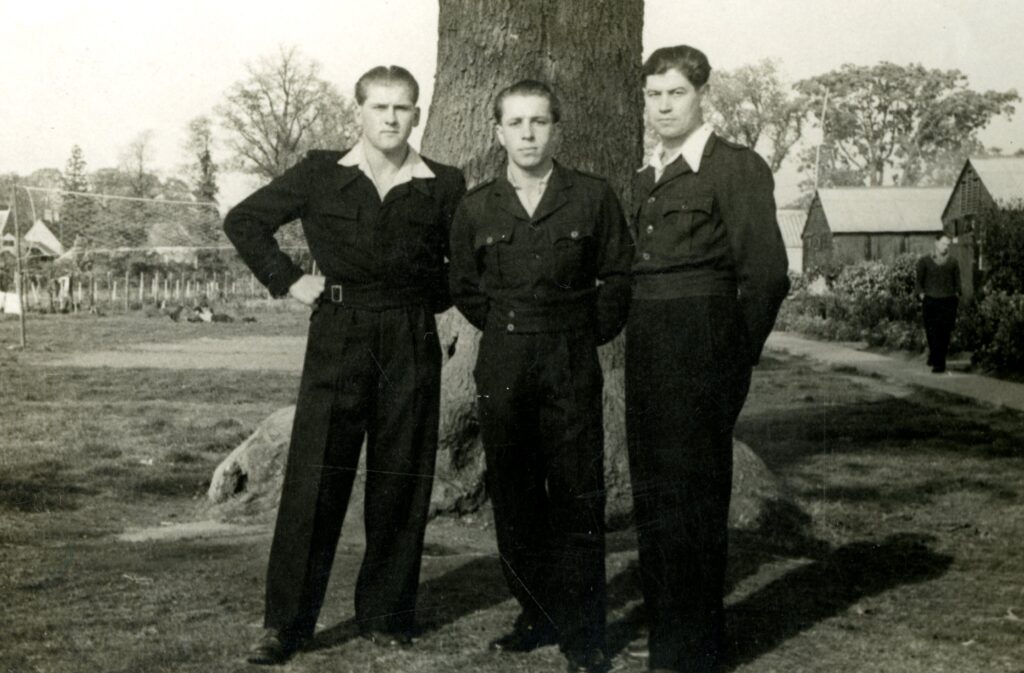
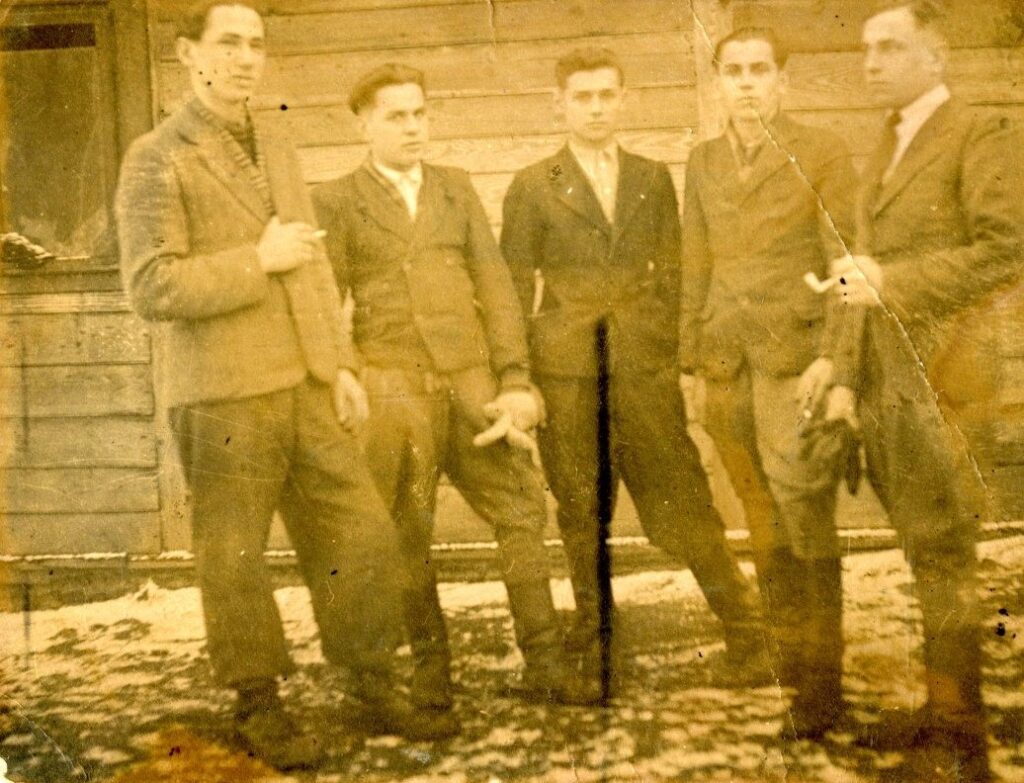
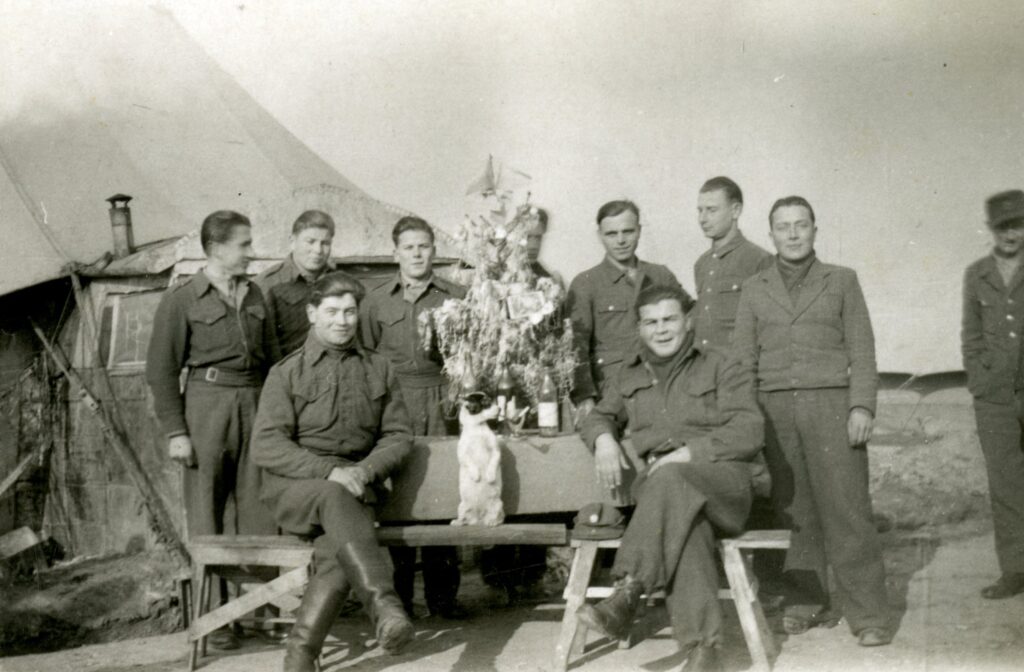
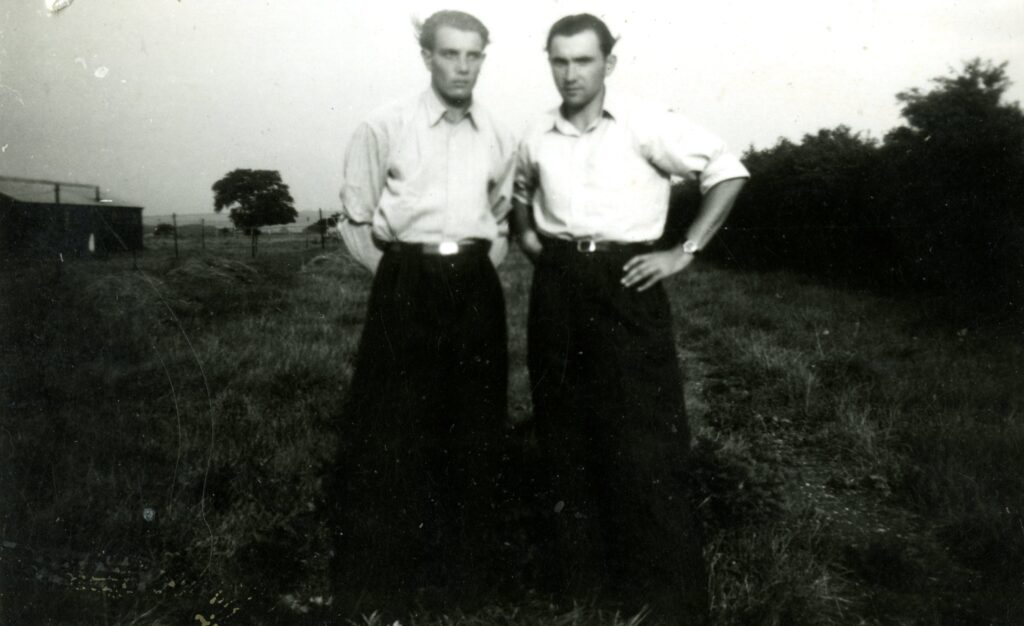
Classed as ‘alien’ workers, EVWs filled important gaps in the labour market. This included jobs in agriculture, industry and textiles. At first, EVWs had no choice over what job they were placed in. This restriction was lifted from January 1951 for EVWs who had been living in the UK for three years or more. A number of Ukrainians applied to work in the Scunthorpe steel industry.
Through their wages, Ukrainians gradually bought houses in Scunthorpe. Different families often lived together until they could afford their own homes.
Local Figures
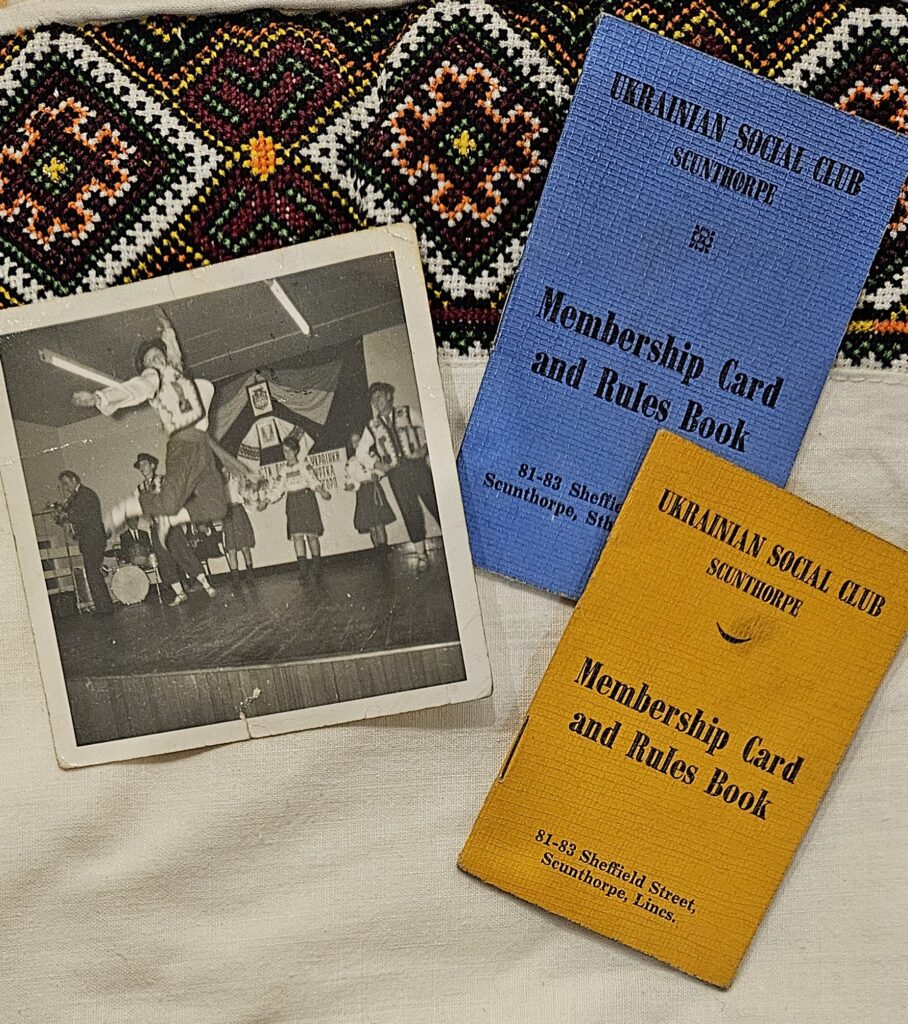
One key theme which emerged through the exhibition working group was the importance of the Scunthorpe Ukrainian Social Club and the Ukrainian Saturday School. The work of the Social Club and Saturday School gave the children of post Second World War Ukrainian settlers a place to explore and learn about their identity. The Saturday School encouraged children to learn Ukrainian music, poetry and dance. These were showcased at competitions locally and nationally. It held a youth group of the Ukrainian Youth Association of Great Britain and was connected to the Association of Ukrainians in Great Britain. It was headed by a key figure.
Peter Maslij
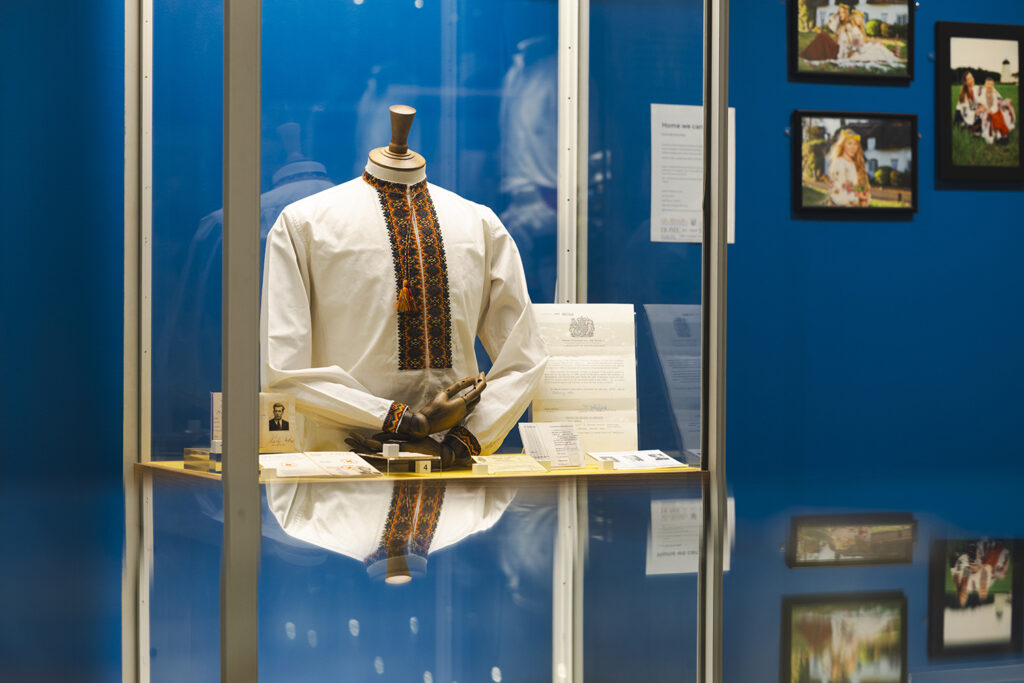
Peter was born in Lychintsi near Rohatyn. Peter’s family lost their farm and possessions in 1939 when the Russian Red Army advanced. Many young Ukrainians, including Peter, were encouraged or forced to fight against Soviet Rule. At the end of the Second World War, Peter was sent to Rimini in Italy, as a Prisoner of War. Peter was then transferred to Horbling Prisoner of War Camp in Lincolnshire. After his release he settled in Scunthorpe where he began work as a labourer, helping build Keadby power station. He later trained as an electrical engineer at North Lindsey College. He rose to become Chief Electrical Training Officer at Scunthorpe Steelworks.
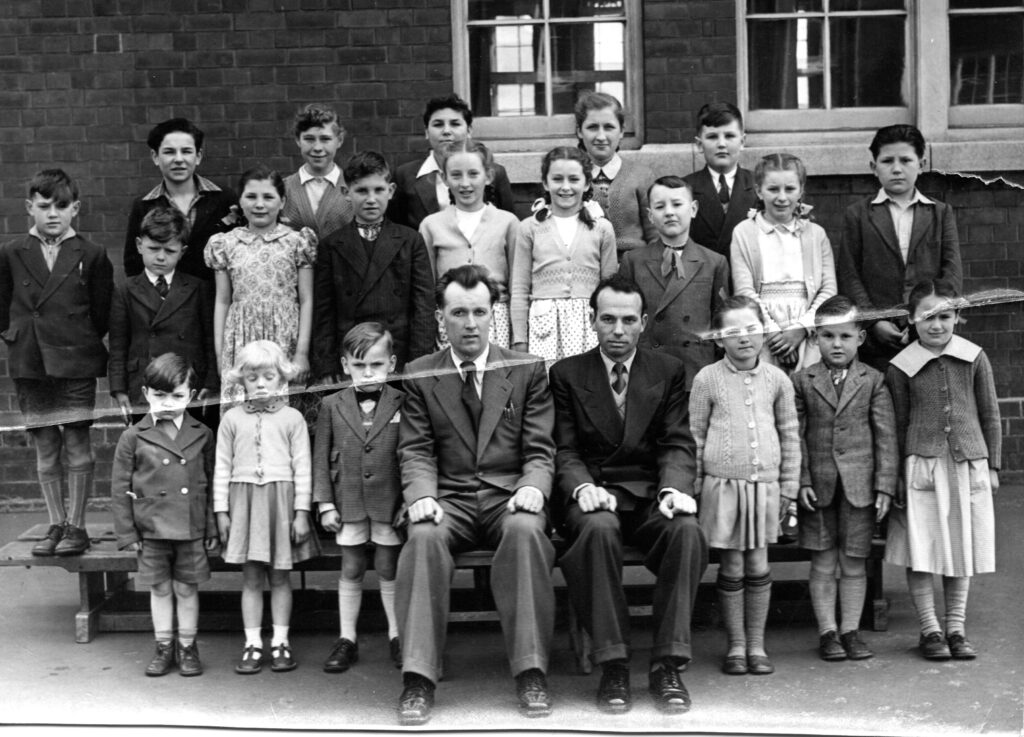
Peter dedicated his time to building, running and teaching in the Ukrainian Saturday School. He stood as a local Conservative councillor in the 1970s.
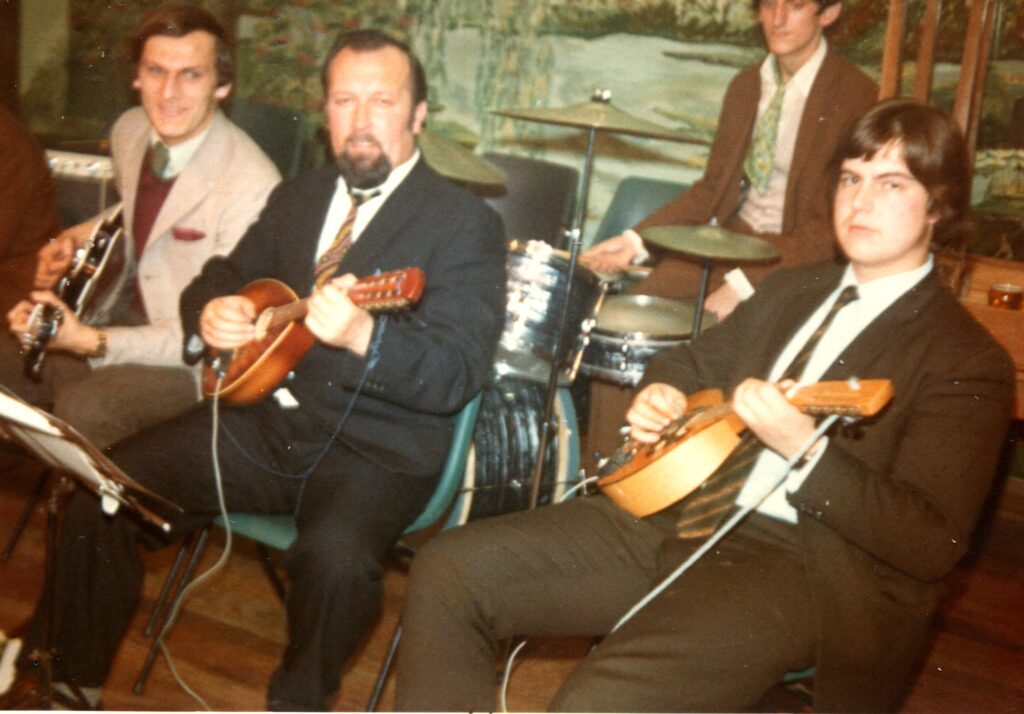
Connection Across Diasporas
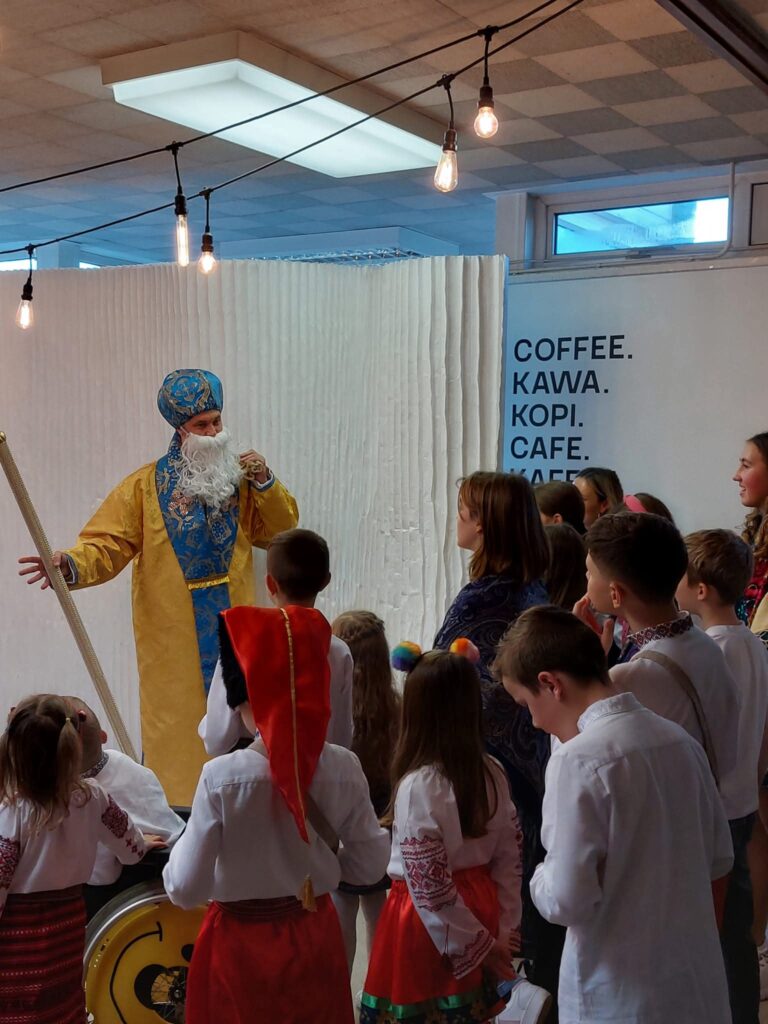
Preservation of identity connects the post Second World War community and those who have settled in North Lincolnshire due to the ongoing war in Ukraine. After the Second World War, Ukrainians who settled in Scunthorpe encouraged their children to participate in the Ukrainian Saturday School to learn Ukrainian language, history and culture. In the present day, Ukrainians who have come to live in North Lincolnshire as a result of the war have created the Ukrainian Kids Club for children to remain connected to their roots.
Scunthorpe Ukrainian Social Club and Saturday School
Scunthorpe Ukrainian Club was based on 81-83 Sheffield Street and opened in 1963. The Club was a focal point for Ukrainians in the town. It meant they could remain connected to Ukrainian culture.
Ukrainians who had settled in the area after the Second World War, financed the building of the club. People contributed in any way they could, including helping with the construction. The club hosted plays, dances, music performances and celebrations. Events at the club were often open to all.
A Saturday School was formed for children, run by volunteers and headed by Peter Maslij. At the Saturday School children learnt the language and history of Ukraine. Dance groups and a choir were also formed. Children learnt dances such as hopak, a traditional folk dance. Groups competed in competitions and showcases nationally and locally, with great success.
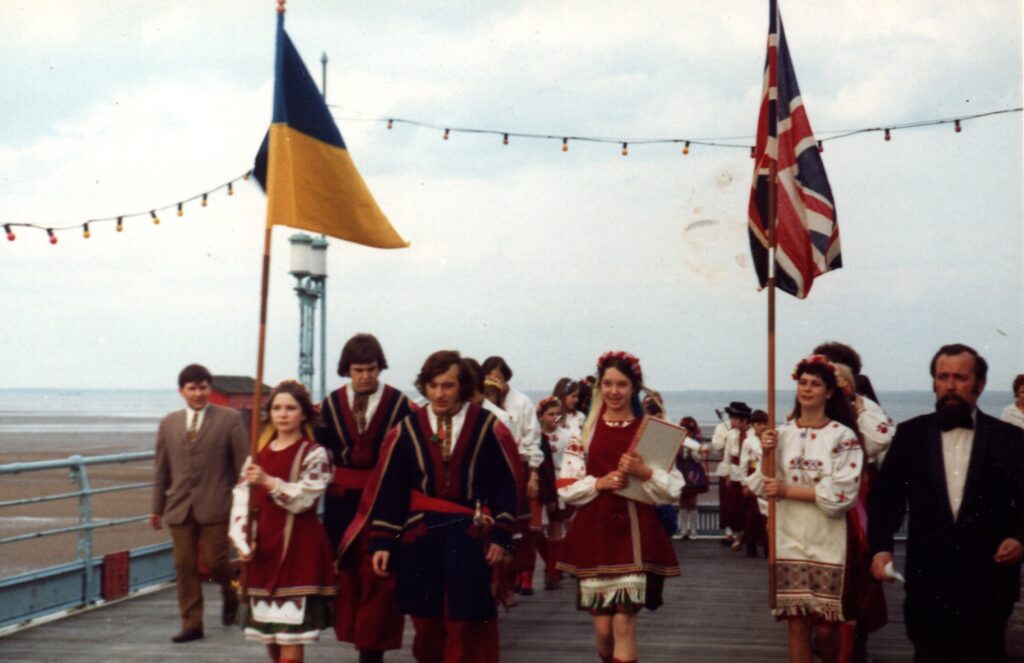
The club was connected to other Ukrainian societies in Britian, such as the Ukrainian Youth Association of Great Britian. Societies networked and visited one another. They organised meet ups, competitions and camps.
The Ukrainian Kids Club
The Ukrainian Kids Club was started in 2023 by Iryna Fowles. Many of the children who attend are part of families who have settled in the area after being displaced by Russia’s full-scale invasion of Ukraine.
In its first year, the Kids club was supported by funding from Lions and Rotary Clubs. In its second year the club was supported by Oasis Community Space, who have remained consistent supporters.
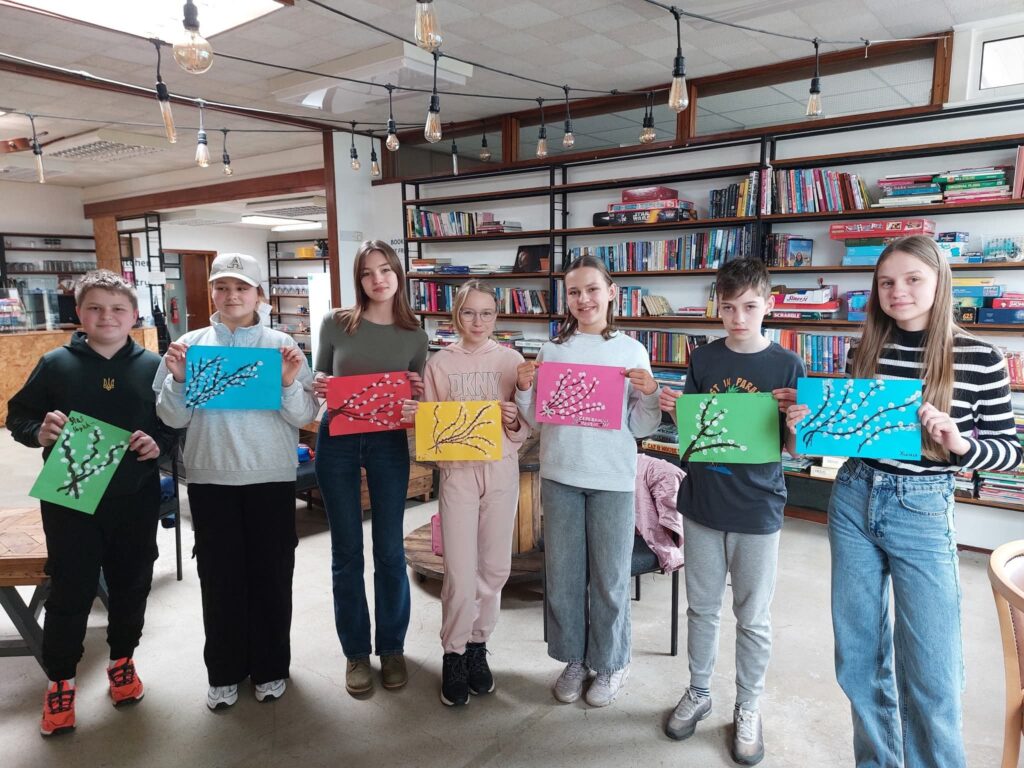
The Ukrainian Kids Club meet every weekend in term time. Elders of the community act as teachers and plan activities to help children retain Ukrainian history, language and tradition. Children also prepare dances, plays and songs, often showcased at events. Teachers commit their time voluntarily, often in addition to other working commitments, showing the strength and dedication they have to their community.
Solidarity Between Generations
Members of the exhibition working group were united by their strong connection to Ukraine. The group included second generation Ukrainians, people who had come to live in the UK after the fall of the Soviet Union, and those who had come through the Homes for Ukraine scheme as a result of the ongoing war. All generations are helping with charitable efforts. Some members of the working group travel into Ukraine to distribute aid to orphanages, local bake sales are held and creatives auction paintings at events.
Community Support and Fundraising
Ukraine is supported by strong networks and communities, from coffee mornings and raffles in village halls to taking medical aid to soldiers in the conflict. Local support and fundraising efforts make a difference for Ukrainians who have come to live in North Lincolnshire, as well as those who remain in Ukraine.
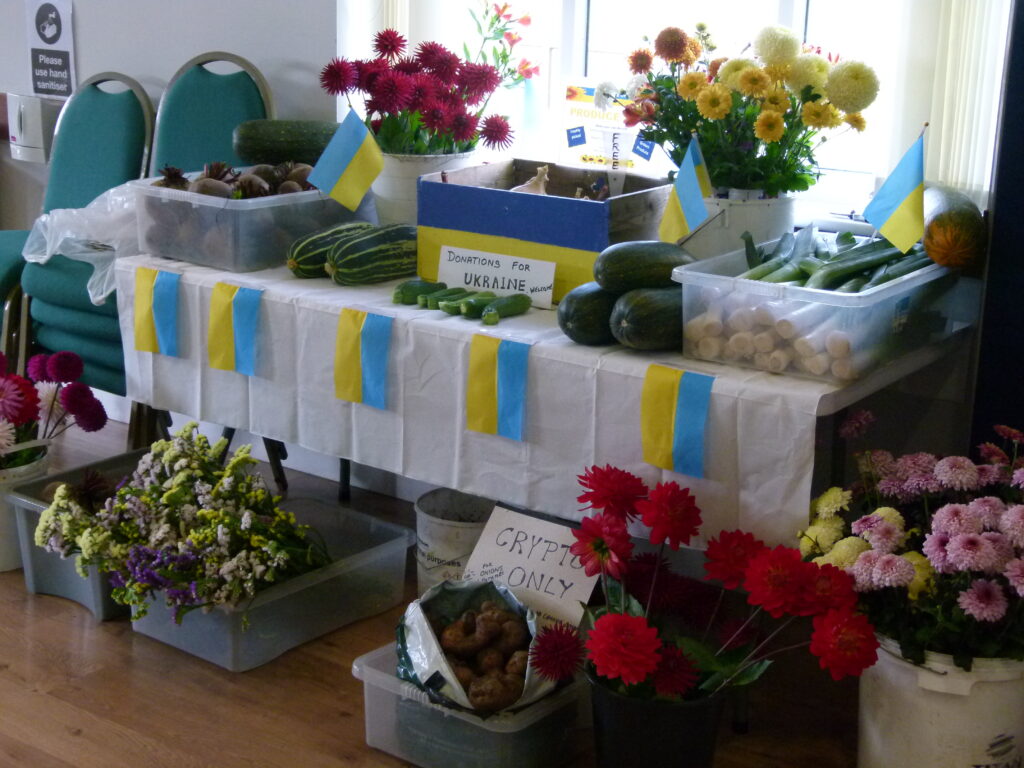
North Lincolnshire for Ukraine became a charity in December 2025. It is chaired by Olha Makukh. The charity helps Ukrainians who have come to the UK because of the war. It works to protect and grow Ukrainian language, culture, and traditions. It gives special support to Ukrainian children and young people. The charity also helps people from different cultures learn from each other and feel part of the community. It runs learning activities, cultural events, and community projects across North Lincolnshire.
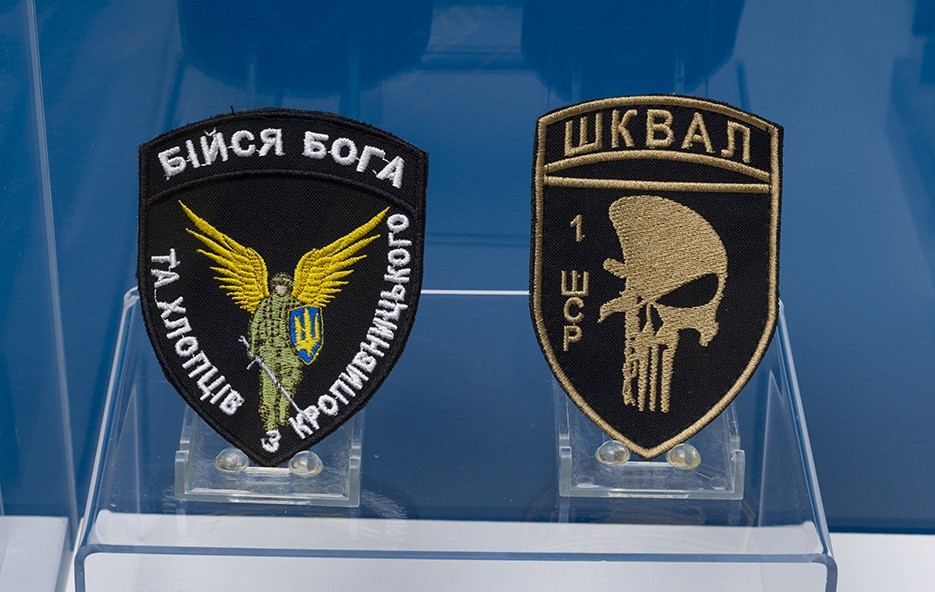
Ukraine Fundraiser is a nongovernmental organisation based in Winterton. Ukraine Fundraiser predominantly delivers medical, mobility and certain food aid. Clothing and bedding are collected for refugees. The organisation is recognised by UNESCO. One of its founders, Mike Hockham, is the recipient of the ‘Ukraine in the Heart’ award from the Ukrainian government for his work.
Fundraising is a whole community endeavour. The children of Ukrainians who came to live in the area after the Second World War, local people and recently arrived Ukrainians all dedicate their time.
The War in Ukraine – Written by Anna Pukas-James
On 27 February 2014, Russian forces stormed the Crimean parliament and seized the peninsula. In late 2021, Russians troops began gathering near Ukrainian borders. Russia’s president, Vladimir Putin, insisted there were no plans to invade Ukraine. On 24 February 2022, a full-scale invasion was launched. It began with air strikes and a ground invasion from the north, south and east.
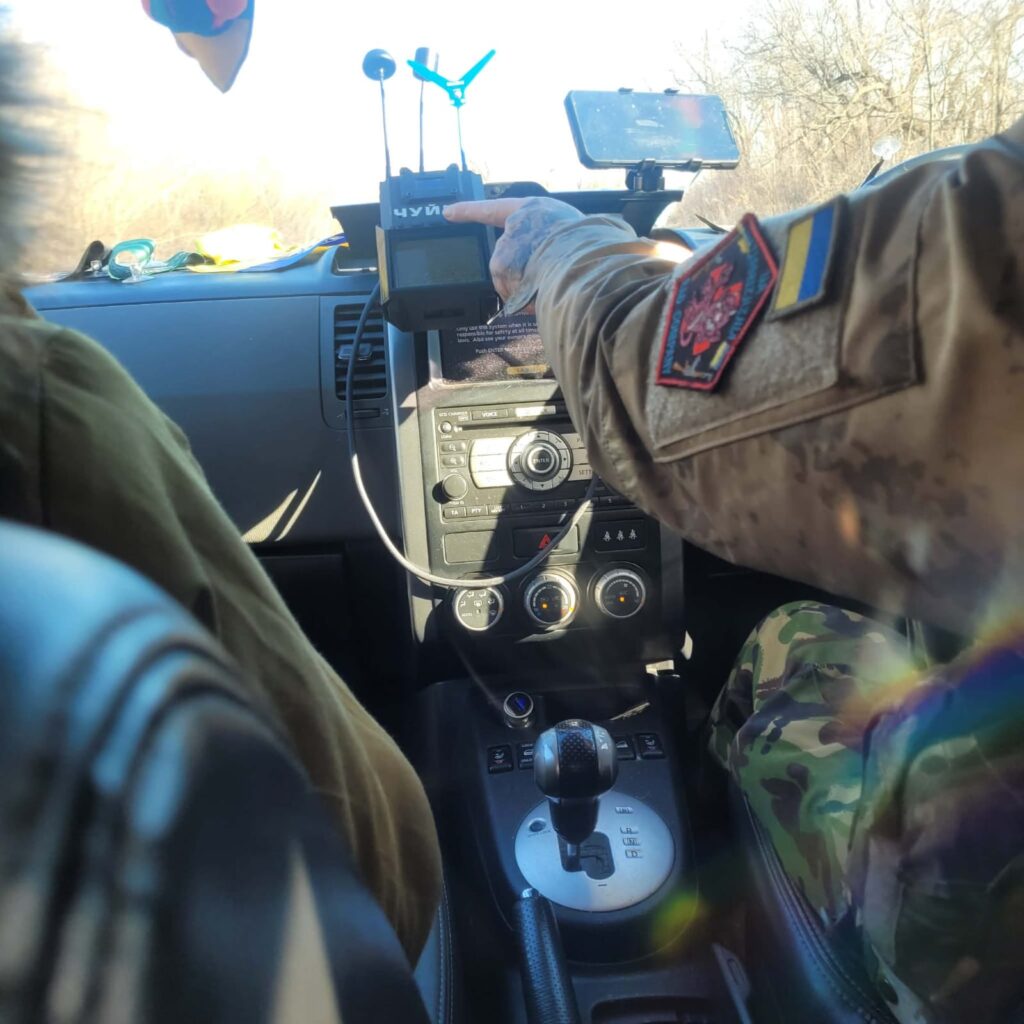
Putin claimed it was “a special military operation”1. He justified the invasion by falsely claiming it was to save Ukrainians from being oppressed by “neo-Nazis”2. Putin expected Ukraine to fall within three days. Under the leadership of Ukrainian president Volodymyr Zelenskyy, Russian forces were driven out everywhere except the Donbas region in south-east Ukraine. After three months of war, Putin announced he was concentrating his forces on the Donbas. The Donbas region is where Ukraine’s rich reserves of coal, gas and oil are located. Russia continues to attack infrastructure such as power stations and water plants all over Ukraine.
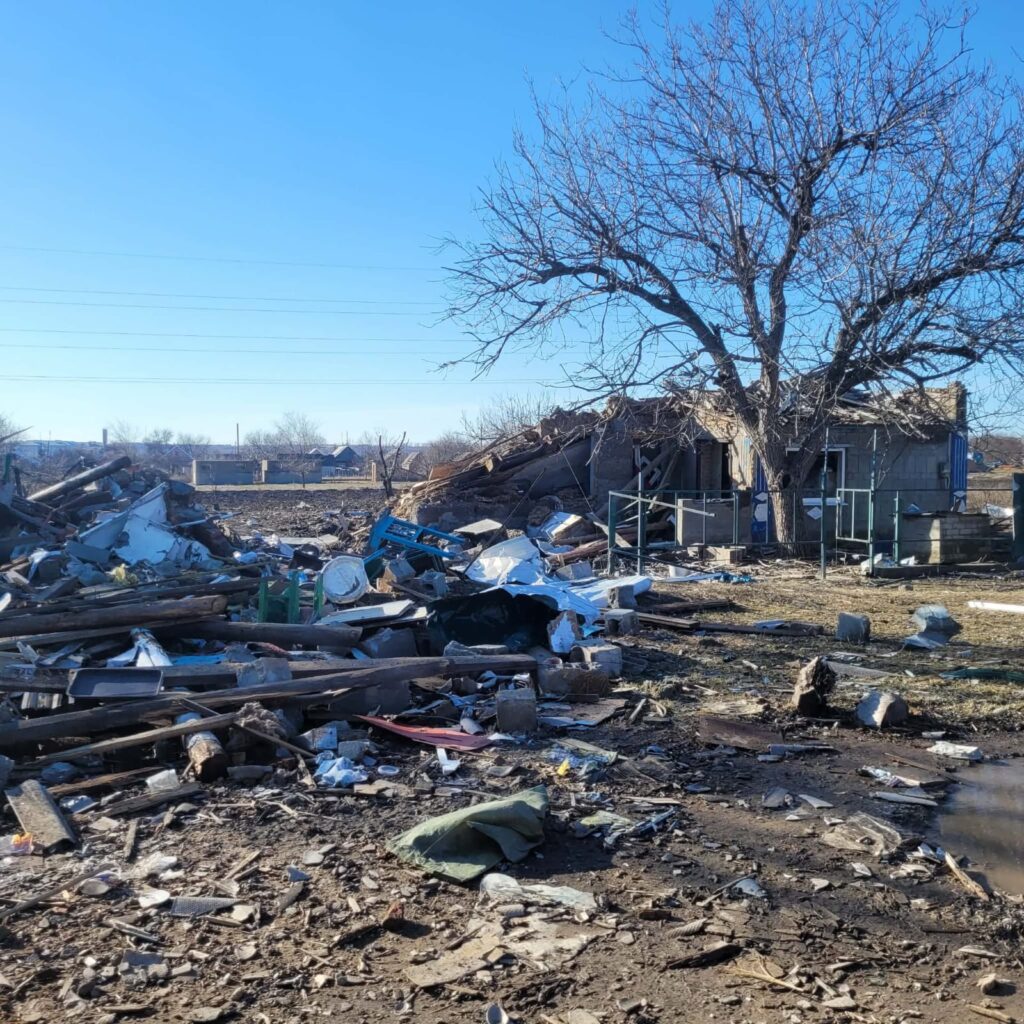
108 governments have condemned the war. The International Criminal Court is investigating Russia for genocide and crimes against humanity. This includes the abduction of at least 20,000 Ukrainian children for forced adoption into Russian families.
The war is the largest and deadliest European conflict since the Second World War. Despite increasing hardship, the resistance continues. Even elderly ladies have been mobilised to make combat netting!
This information is correct at time of writing in May 2026.
References
- “No other option’: Excerpts of Putin’s speech declaring war”. Al Jazeera. 24 February 2022
- “Ukraine conflict: Russian forces attack from three sides”. BBC News. 24 February 2022
More to Explore
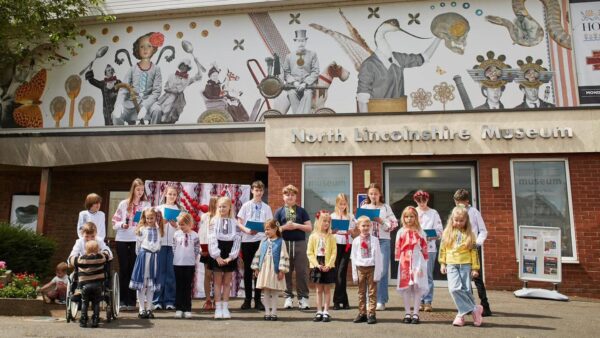
Home in Our Hearts – Дім у наших серцях: The Exhibition Part 2
On-line exhibition showcasing the Home in Our Hearts exhibition which celebrated 80 years of the Ukrainian community in North Lincolnshire. This article focuses on the arts, crafts and culture sections of the exhibition.
Read the story
Home in Our Hearts – Дім у наших серцях -The Film
Discover the story of the Home in Our Hearts exhibition through a short film.
Watch the film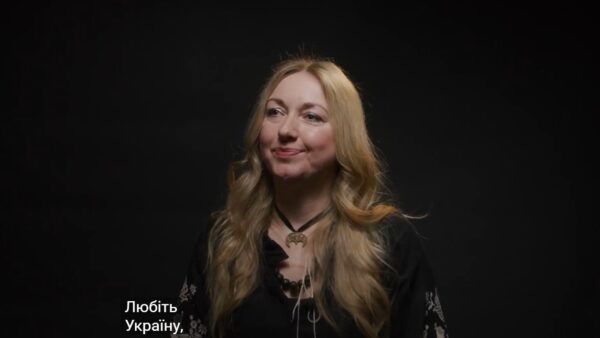
Ukrainian Poetry
Svitlana, a member of the Home in Our Hearts exhibition working group, recites a selection of Ukrainian poems.
Watch the films